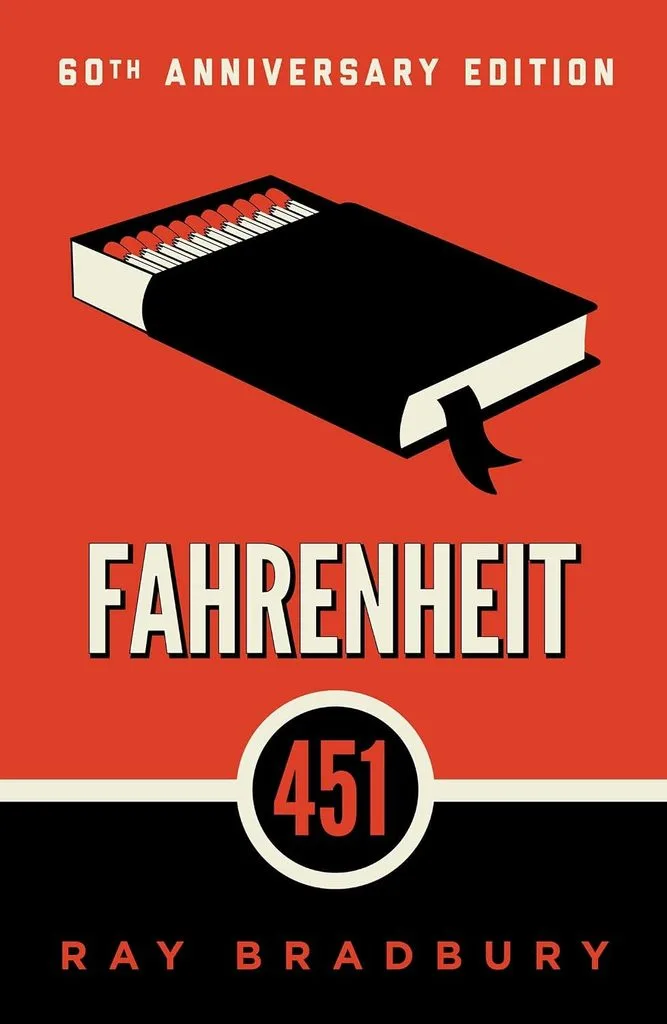
Fahrenheit 451: A Novel
Censorship, Politics & Government, Specific Topics
Guy Montag is a fireman. His job is to destroy the most illegal of commodities, the printed book, along with the houses in which they are hidden. Montag never questions the destruction and ruin his actions produce, returning each day to his bland life and wife, Mildred, who spends all day with her television “family.” But when he meets an eccentric young neighbor, Clarisse, who introduces him to a past where people didn’t live in fear and to a present where one sees the world through the ideas in books instead of the mindless chatter of television, Montag begins to question everything he has ever known.
- Release Date
- 1953
- Publisher
- Ballantine Books
We may earn a commission if you buy through these links, at no extra cost to you.
Our Review
About the book
In a future America where books are outlawed, fireman Guy Montag’s job is to burn them. After a series of unsettling encounters, including one with a curious young neighbor, he begins to question the screen-saturated, hollow society around him and the role he plays in it.
Our review
Seventy years on, Bradbury’s story of a book-burning fireman reads less like a prophecy and more like a mirror.
What keeps Fahrenheit 451 alive is not its premise, famous as it is, but Bradbury’s sense of why people might welcome censorship. The book understands that a population numbed by constant entertainment and noise might give up its books with relief. Montag’s awakening is anxious and clumsy rather than heroic, which makes it convincing, and the prose has a feverish, poetic intensity unlike most dystopian fiction.
It is a short novel, and some elements show their age: female characters are underwritten, and the dialogue sometimes turns into speeches that spell out the themes. A few of the later chapters move abruptly. Yet the image of the parlor walls, the hunting Mechanical Hound and the people who keep books alive in memory remain startlingly vivid, and few classics feel this relevant on a reread.
What we loved
- Lyrical, urgent prose in a compact package
- A sharp diagnosis of distraction, not just censorship
- Images that stay with you for years
Keep in mind
- Women characters are thinly drawn
- Some passages turn preachy and speech-like
Read it if you like
1984, Brave New World, readers interested in media, technology and free thought
The verdict
An essential, eerily current classic whose warning about willing ignorance burns brighter than its occasional flaws.