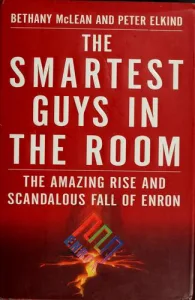
Fortune journalists Bethany McLean and Peter Elkind trace the rise and collapse of Enron, the energy company whose accounting fraud led to one of the largest bankruptcies in American history. The book examines its leaders, its culture and the banks, auditors and analysts who enabled it.
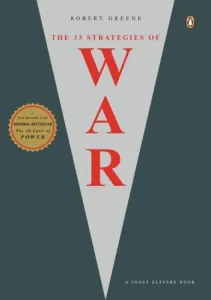
Robert Greene adapts principles of military strategy to everyday conflict, organizing thirty-three strategies into groups such as defensive, offensive and unconventional warfare. Each chapter draws on history, from ancient generals to modern politicians and filmmakers.
In this essay addressed to his friend Paulinus, the Stoic philosopher Seneca argues that life is not short but wasted, as people squander their time on busyness, ambition and the demands of others. He urges a deliberate life given to reflection and study.
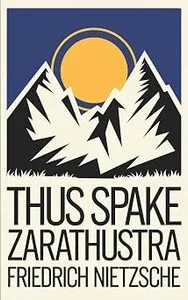
Thus Spake Zarathustra is Friedrich Nietzsche’s groundbreaking and poetic masterpiece, offering a visionary exploration of human existence, morality, and the pursuit of greatness. This thought-provoking work challenges readers to rethink conventional beliefs and embrace the transformative power of self-overcoming.
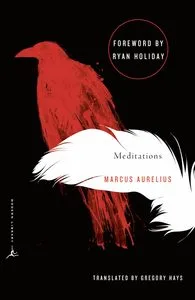
The private notebooks of the Roman emperor Marcus Aurelius, written in the second century as reminders to himself on duty, mortality, self-control and acceptance, here rendered in contemporary English by Gregory Hays. The Modern Library edition includes an introduction to Marcus's life and Stoic philosophy along with notes.
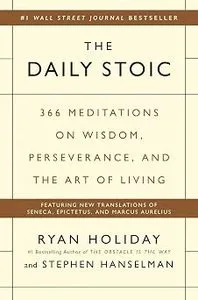
What can ancient wisdom teach us about living with greater calm, resilience, and self-control today? *The Daily Stoic* offers 366 days of insights and practical exercises inspired by the teachings of Stoic philosophers such as Marcus Aurelius, Seneca, Epictetus, Zeno, Cleanthes, and Musonius Rufus. Each day combines a powerful quotation with historical context, thoughtful commentary, and practical guidance for applying Stoic principles to everyday life. Designed to be revisited throughout the year and beyond, the book encourages greater self-awareness, emotional resilience, and clarity in facing life’s challenges.
What if the values we accept as true are worth questioning? In *Beyond Good and Evil*, Friedrich Nietzsche challenges conventional ideas about morality, truth, virtue, and human behavior, urging readers to reconsider the assumptions underlying traditional philosophy. Through sharp aphorisms and provocative arguments, he examines the hidden motives behind moral beliefs and calls for a more independent way of thinking. At the heart of the book is the idea of the “free spirit”—someone willing to move beyond conformity, question inherited values, and confront the complexity of human existence with courage, creativity, and intellectual freedom.
What if the stories we’ve told for thousands of years are all variations of the same journey? In *The Hero with a Thousand Faces*, Joseph Campbell explores the universal patterns found across the world’s myths, introducing the influential concept of the Hero’s Journey—a cycle of departure, transformation, and return that appears again and again in stories of adventure and discovery. Drawing on comparative mythology and psychology, Campbell also examines the mythic cycle of creation and destruction. Thought-provoking and deeply influential, this classic explores why humans tell stories and what those stories reveal about our shared search for meaning, identity, and transformation.
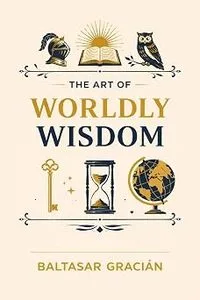
What does it take to move through life with wisdom, self-control, and good judgment? Written in the seventeenth century, *The Art of Worldly Wisdom* by Baltasar Gracián brings together 300 concise maxims on human behavior, decision-making, relationships, ambition, reputation, and personal success. Rather than offering a formula for manipulation, Gracián encourages readers to understand themselves, read others carefully, and act with discipline and awareness. Sharp, practical, and surprisingly relevant centuries later, this classic offers timeless guidance for navigating a complicated world with greater clarity, dignity, and intelligence.
What does it take to gain power, hold onto it, and survive in a world driven by ambition? In *The Prince*, Niccolò Machiavelli examines the realities of political power, leadership, strategy, and human behavior through advice aimed at rulers and aspiring princes. Rather than focusing on idealized morality, Machiavelli explores how leaders may need to make difficult and sometimes ruthless choices to protect their position and achieve their goals. Written in Renaissance Italy and notable for its use of the vernacular rather than Latin, *The Prince* remains a provocative study of power, ambition, and political strategy.
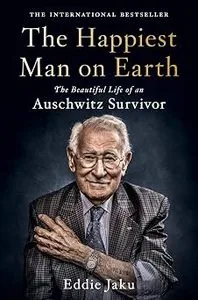
What does it take to hold on to hope when everything has been taken away? In *The Happiest Man on Earth*, Eddie Jaku recounts his extraordinary journey as a Jewish teenager who survived the horrors of Nazi persecution, Buchenwald, Auschwitz, and a forced death march during World War II. Despite unimaginable loss, Eddie chose to build his life around gratitude, kindness, friendship, and hope. Told with warmth and honesty, his memoir reflects on the experiences that shaped his outlook and offers timeless lessons about resilience, forgiveness, and finding beauty in life after profound suffering.
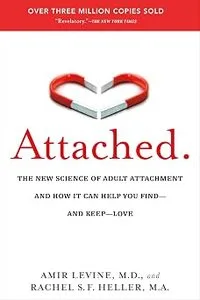
Why do some relationships feel natural and secure while others seem filled with uncertainty or distance? In *Attached*, psychiatrist and neuroscientist Amir Levine and psychologist Rachel Heller explore how adult attachment styles can shape the way people experience intimacy and relationships. They introduce three primary patterns—anxious, avoidant, and secure—and explain how each can influence communication, closeness, and emotional needs. By helping readers recognize their own attachment style and understand those of their partners, the book offers a practical framework for navigating relationships with greater awareness and building stronger, more fulfilling connections.