Video review — tap to play
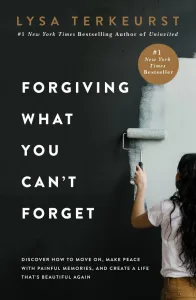
Forgiving What You Can’t Forget: Discover How to Move On, Make Peace with Painful Memories, and Create a Life That’s Beautiful Again
Christian Books & Bibles, Christian Living, Faith
What do you do when the hurt won’t go away and the person who caused it refuses to make things right? In *Forgiving What You Can’t Forget*, Lysa TerKeurst explores the difficult process of letting go of resentment and moving forward without waiting for an apology or change from someone else. Drawing on personal experience, therapeutic insight, and biblical teaching, she offers a practical framework for understanding forgiveness, rebuilding trust, and responding to emotional triggers. Compassionate and honest, the book encourages readers to confront painful experiences while discovering a path toward healing, peace, and renewed hope.
- Release Date
- 2020
- Length
- 272 pages
- Publisher
- Thomas Nelson
We may earn a commission if you buy through these links, at no extra cost to you.
Our Review
About the book
Bible teacher Lysa TerKeurst draws on her husband’s infidelity and the painful aftermath to explore what forgiveness means and what it does not. She distinguishes forgiveness from reconciliation, discusses boundaries, and offers a faith-based path toward healing.
Our review
A wounded, honest Christian take on forgiveness that refuses to pretend it is easy or that it requires staying.
TerKeurst writes from inside the pain: the betrayal she describes is recent and raw, and that rawness is the book’s power. She is clearest when separating forgiveness, which she frames as a decision before God, from reconciliation and trust, which require changed behavior. Her section on boundaries is especially helpful for readers raised to believe that being a good Christian means absorbing harm without protest.
The book is long for its argument, and its devotional style circles back on key points more than once. Its framework is thoroughly biblical, so secular readers may find the spiritual steps central rather than additive. Some readers in abusive situations may also want more professional guidance than a memoir-devotional can offer. For its intended audience, though, it is compassionate, scripturally grounded and notably more nuanced than much writing on the topic.
What we loved
- A clear distinction between forgiveness and reconciliation
- Thoughtful, healthy treatment of boundaries
- Vulnerable personal storytelling
Keep in mind
- Repetitive and longer than it needs to be
- Strongly faith-based, with limited appeal outside Christian readership
Read it if you like
readers of Boundaries by Cloud and Townsend, women’s Bible study groups, fans of It’s Not Supposed to Be This Way
The verdict
A heartfelt, nuanced faith-based guide to forgiveness, if a bit long in the telling.