Video review — tap to play
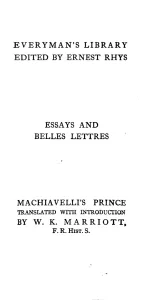
The Prince
Classics, Philosophy Politics & Social Sciences
What does it take to gain power, hold onto it, and survive in a world driven by ambition? In *The Prince*, Niccolò Machiavelli examines the realities of political power, leadership, strategy, and human behavior through advice aimed at rulers and aspiring princes. Rather than focusing on idealized morality, Machiavelli explores how leaders may need to make difficult and sometimes ruthless choices to protect their position and achieve their goals. Written in Renaissance Italy and notable for its use of the vernacular rather than Latin, *The Prince* remains a provocative study of power, ambition, and political strategy.
- Release Date
- 1532
We may earn a commission if you buy through these links, at no extra cost to you.
Our Review
About the book
Written around 1513 and published posthumously in 1532, Niccolò Machiavelli’s political treatise advises rulers on how to acquire, keep and strengthen power. Drawing on examples from ancient history and Renaissance Italy, it discusses principalities, military matters and the qualities a prince must display, often separating political effectiveness from conventional morality.
Our review
Five centuries on, Machiavelli’s slim handbook remains one of the most honest, and most unsettling, books about power we know.
Machiavelli’s reputation precedes him, but the actual book is more interesting than the caricature. It is short, clear and remarkably practical, built around case studies of rulers who succeeded or failed, from Roman emperors to the Borgias. What made it shocking, and still makes it compelling, is its refusal to pretend that politics runs on good intentions. We found its observations about fortune, reputation and the costs of indecision still sharp today.
Context matters, though. Many examples assume familiarity with Renaissance Italian politics, so an edition with notes is almost essential. Readers should also know that scholars still debate whether Machiavelli was sincere, satirical or writing to win favor, and his other works suggest more republican sympathies. Read it as a lens on power rather than a manual for life, and it is endlessly thought-provoking.
What we loved
- Concise and surprisingly readable
- Clear-eyed analysis of how power really works
- Fascinating historical examples
Keep in mind
- Requires notes to follow the Renaissance context
- Easy to misread as a simple endorsement of cruelty
Read it if you like
readers of Sun Tzu’s The Art of War, fans of Robert Greene, students of politics and history
The verdict
A short, essential classic that remains provocative and illuminating, best read with good notes and an open mind.