Video review — tap to play
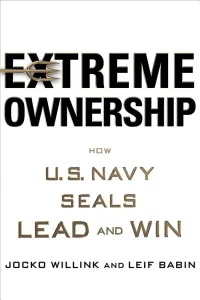
Extreme Ownership: How U.S. Navy SEALs Lead and Win (Extreme Ownership Series Book 1)
Afghan & Iraq Wars, Biographies and Memoirs, Historical, Iraq War, Military & Wars
What does it take to lead a team through the most difficult challenges? In *Extreme Ownership*, former Navy SEALs Jocko Willink and Leif Babin draw on their experiences in the Iraq War to explore the leadership principles that helped their unit operate in one of the conflict’s most dangerous environments. Through firsthand stories and practical lessons, they examine ideas such as taking full responsibility, decentralized command, Cover and Move, and Leading Up the Chain. The book translates these principles from combat into practical guidance for leading teams, organizations, and everyday relationships.
- Release Date
- 2015
- Length
- 320 pages
- Publisher
- St. Martin's Press
We may earn a commission if you buy through these links, at no extra cost to you.
Our Review
About the book
Former Navy SEAL officers Jocko Willink and Leif Babin draw on their combat experience in Iraq, particularly in Ramadi, to lay out leadership principles for business and life. Each chapter pairs a battlefield story with a principle, such as taking full responsibility for outcomes, and then a corporate application.
Our review
Combat leadership lessons with a blunt core message: whatever went wrong, it is on you.
The book’s structure is disciplined and effective. Each chapter opens with an intense account from the authors’ deployments, distills a principle such as covering for one another, keeping plans simple or prioritizing and executing, and then shows how it played out with a corporate client. The central idea, that leaders own every outcome rather than blaming circumstances or subordinates, is stated forcefully and illustrated well. The war stories are vivid, and they give the principles real weight.
The business case studies are noticeably weaker than the combat sections, sometimes feeling like generic consulting vignettes. The relentless intensity of the tone can also be wearing, and the framework says little about how responsibility should work in organizations where leaders lack authority or face structural problems. Readers uneasy with military framing may struggle with parts of it. As a call to accountability, though, it is clear, memorable and hard to argue with.
What we loved
- Vivid firsthand combat narratives
- Clear, repeatable chapter structure
- A memorable, actionable core principle
Keep in mind
- Corporate examples feel thin next to the war stories
- Intense tone and military lens will not suit every reader
Read it if you like
Leaders Eat Last by Simon Sinek, Turn the Ship Around by L. David Marquet, new managers and team leads
The verdict
A forceful, readable leadership manual whose central lesson sticks, even if the boardroom chapters lack the fire of the battlefield.