Video review — tap to play
Narcissus and Goldmund
Genre Fiction, Historical, Renaissance
Two mediaeval men, one peacefully happy with his religion and monastery life and the other fervently seeking a more worldly salvation, are depicted in Hesse's novel. Hesse used this clash between the physical and spiritual worlds, between the emotional and reflective man, as a life study. It is a subject that is timeless. He has appealed to both an underground and an establishment, as well as to dissatisfied young people who share his disdain for our industrial civilization. The Hesse Phenomenon "has transformed into a vogue, the vogue into a flood." the book review in The New York Times
- Release Date
- 1930
- Publisher
- S. Fischer Verlag
We may earn a commission if you buy through these links, at no extra cost to you.
Our Review
About the book
Set in medieval Germany, Hermann Hesse’s 1930 novel follows the bond between Narcissus, an ascetic young teacher at a monastery, and Goldmund, a passionate student who leaves the cloister to wander the world. Their contrasting paths, one of intellect and faith, the other of the senses and art, frame the book’s exploration of how to live.
Our review
Hesse’s warmest novel sets the mind against the senses and refuses to let either one win.
This is Hesse at his most generous and most sensual. The friendship between the disciplined thinker and the restless wanderer gives the book its spine, and the long middle section following Goldmund through forests, villages and workshops has the feel of a medieval picaresque. We loved how Hesse treats both lives with real respect: the monastery is not a prison, and the open road is not simply freedom. The question of what makes a life complete lingers well after the final page.
Modern readers may find the pacing leisurely and the episodic wandering occasionally repetitive. Women in the story mostly appear as experiences in Goldmund’s journey rather than full characters, which dates the book noticeably. Still, the prose is luminous in good translation, and the closing chapters land with real emotional force. For many readers this becomes their favorite Hesse, more human and less austere than Steppenwolf or Siddhartha.
What we loved
- A moving, complex friendship at its core
- Rich, atmospheric medieval setting
- Thoughtful balance between intellect and passion
Keep in mind
- Episodic middle section can feel slow
- Female characters are thinly drawn
Read it if you like
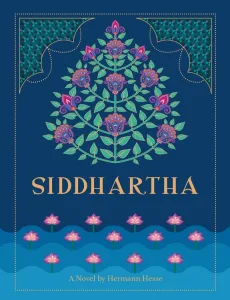
readers who loved Siddhartha, fans of Umberto Eco’s The Name of the Rose, lovers of philosophical coming-of-age novels
The verdict
A lyrical, deeply humane novel that may be Hesse’s most rewarding, ideal for readers who like their philosophy wrapped in story.