Video review — tap to play
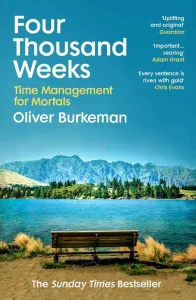
Four Thousand Weeks: Time Management for Mortals
What if the real problem with time isn’t how to manage it, but how to accept that we’ll never have enough of it? In *Four Thousand Weeks*, Oliver Burkeman challenges our endless pursuit of productivity, efficiency, and getting everything done. Drawing on philosophy, psychology, and spiritual thought, he explores why our attempts to control time often leave us feeling even more rushed and overwhelmed. Instead, the book invites us to embrace life’s limits, make deliberate choices about what truly matters, and build a meaningful life within the surprisingly short time we have.
- Release Date
- 2021
- Length
- 288 pages
- Publisher
- Farrar, Straus and Giroux
We may earn a commission if you buy through these links, at no extra cost to you.
Our Review
About the book
Oliver Burkeman’s book takes its title from the approximate length of an average human life and argues that productivity culture misleads us by promising we can eventually get everything done. Drawing on philosophy and psychology, it urges readers to accept their finitude, make hard choices about what to neglect, and find meaning within limited time.
Our review
The time-management book for people exhausted by time-management books, and it is wiser than nearly all of them.
Burkeman, a former productivity enthusiast, writes as someone who tried every system and discovered the treadmill only speeds up. His argument is that efficiency often creates more demands, and that real peace comes from accepting you will never clear the list. That sounds bleak but reads as a relief. He draws on Heidegger, Buddhist thought and Jungian psychology without ever sounding academic, and his prose is funny, humane and full of precise little observations about modern busyness.
The book is more philosophy than toolkit. Readers wanting step-by-step methods will find only a handful of concrete suggestions near the end, and a few chapters circle the same insight from slightly different angles. Some of its advice also assumes a degree of control over one’s schedule that not every reader has. Even so, it offers something rare in the genre: a genuinely different way to think about your days, not just a faster way to fill them.
What we loved
- Thoughtful, witty and genuinely consoling
- Challenges productivity culture rather than feeding it
- Draws lightly on philosophy without jargon
Keep in mind
- Few practical techniques for readers who want systems
- Some chapters revisit the same idea repeatedly
Read it if you like
Stolen Focus by Johann Hari, Die With Zero by Bill Perkins, burnt-out high achievers
The verdict
A humane, clarifying meditation on mortality and attention that may change how you plan your life, not just your week.