Two mediaeval men, one peacefully happy with his religion and monastery life and the other fervently seeking a more worldly salvation, are depicted in Hesse's novel. Hesse used this clash between the physical and spiritual worlds, between the emotional and reflective man, as a life study. It is a subject that is timeless. He has appealed to both an underground and an establishment, as well as to dissatisfied young people who share his disdain for our industrial civilization. The Hesse Phenomenon "has transformed into a vogue, the vogue into a flood." the book review in The New York Times
What does it take to gain power, hold onto it, and survive in a world driven by ambition? In *The Prince*, Niccolò Machiavelli examines the realities of political power, leadership, strategy, and human behavior through advice aimed at rulers and aspiring princes. Rather than focusing on idealized morality, Machiavelli explores how leaders may need to make difficult and sometimes ruthless choices to protect their position and achieve their goals. Written in Renaissance Italy and notable for its use of the vernacular rather than Latin, *The Prince* remains a provocative study of power, ambition, and political strategy.
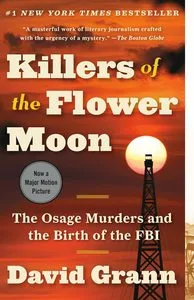
What happens when sudden wealth turns a community into a target? In *Killers of the Flower Moon*, David Grann tells the true story of the Osage Nation in 1920s Oklahoma, where immense oil wealth made its members some of the richest people in the world—before a series of mysterious murders began. As the deaths mount and attempts to uncover the truth are met with further violence, the newly formed FBI takes on the case. Led by former Texas Ranger Tom White, an undercover team works alongside the Osage to expose a chilling conspiracy and one of the darkest criminal investigations in American history.
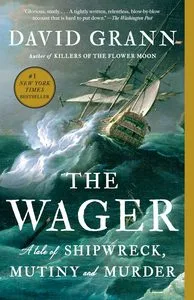
David Grann's history recounts the fate of HMS Wager, a British warship that wrecked off the coast of Patagonia in 1741 during a secret mission. The marooned crew descended into hunger and mutiny, and when rival groups of survivors later reached safety with conflicting accounts, the Admiralty had to decide whose version of events to believe.